How to Buy a Villa in Watamu Kenya (2026 Guide)
Buying a villa in Watamu involves identifying a property, conducting rigorous due diligence on the title deed, and executing a legal sale agreement through a certified lawyer. International investors can securely own land in Kenya via 99-year leaseholds, provided the land is not designated as agricultural, making Watamu a premier destination for luxury coastal investment.
Can foreigners buy property in Watamu?
Yes, foreigners can legally purchase and own property in Watamu, Kenya. The Kenyan Constitution and the Land Act provide a clear framework for international investment. However, there is a primary distinction that every buyer must understand: land ownership for non-citizens is restricted to leasehold interest.
While Kenyan citizens can own land under "Freehold" titles (unlimited ownership in perpetuity), non-citizens are granted 99-year leaseholds . These leases are renewable and offer virtually the same rights of use, development, and sale as freehold titles. If you are looking at Our Listings , you will find that most luxury villas are already situated on leasehold land or can be converted during the purchase process.
It is also important to note that foreigners are generally prohibited from owning "Agricultural Land." Most coastal property in the heart of Watamu is classified as residential or commercial, but if you are looking at larger plots further inland or towards the Mida Creek area, it is vital to verify the land's classification early in the process. Working with an experienced firm like Malindi Watamu Agenti Immobiliari ensures that you are only viewing properties that meet legal eligibility for international buyers.
Understanding Freehold and Leasehold Ownership
When buying a villa in Watamu , you will encounter two main types of land titles. Understanding the difference is crucial for your long-term investment strategy:
- Leasehold Title: This is the most common for foreign investors. The land is owned by the government or a local authority and "leased" to the individual for 99 years. At the end of the term, the lease is typically renewed for a nominal fee.
- Freehold Title: This represents absolute ownership of the land for an indefinite period. Only Kenyan citizens (or companies 100% owned by Kenyan citizens) can hold freehold titles to land.
- Sectional Properties: Many modern developments and apartments, such as the Oasis Apartments Watamu , use sectional titles. This allows you to own your specific unit while sharing ownership of common areas through a management company.
What is the step-by-step process of buying a villa in Watamu?
The journey to owning a piece of paradise is straightforward if you follow the correct legal sequence. The Kenyan real estate market has become increasingly transparent, but it still requires local expertise to navigate the paperwork.
- Property Selection and Negotiation: Once you find a property, such as the stunning VILLA BELLA , you make a formal offer. Once the price is agreed upon, a "Letter of Offer" is usually drafted.
- Engagement of Lawyers: Both the buyer and seller must have independent legal representation. Your lawyer will play a pivotal role in the next steps, particularly in title verification.
- The Sale Agreement: The seller’s lawyer prepares the Sale Agreement. This document outlines the terms of sale, the deposit (usually 10%), and the completion period (typically 90 days).
- Due Diligence (The Search): Your lawyer will conduct an official search at the Land Registry to confirm the property is free of encumbrances (like bank charges or disputes) and that the seller is indeed the legal owner.
- Payment of Deposit: Upon signing the Sale Agreement, the 10% deposit is paid to the seller’s lawyer’s client account. This money is held in escrow until the transaction is completed.
- Completion and Transfer: During the completion period, the buyer pays the remaining 90%. The seller provides the original title deed and the signed transfer documents. The buyer then pays the Stamp Duty to the government.
Best Locations to Buy a Villa in Watamu
Watamu is not a one-size-fits-all destination; each neighborhood offers a distinct vibe and investment potential. Depending on whether you want a quiet retirement home or a high-yield holiday rental, your location choice is paramount.
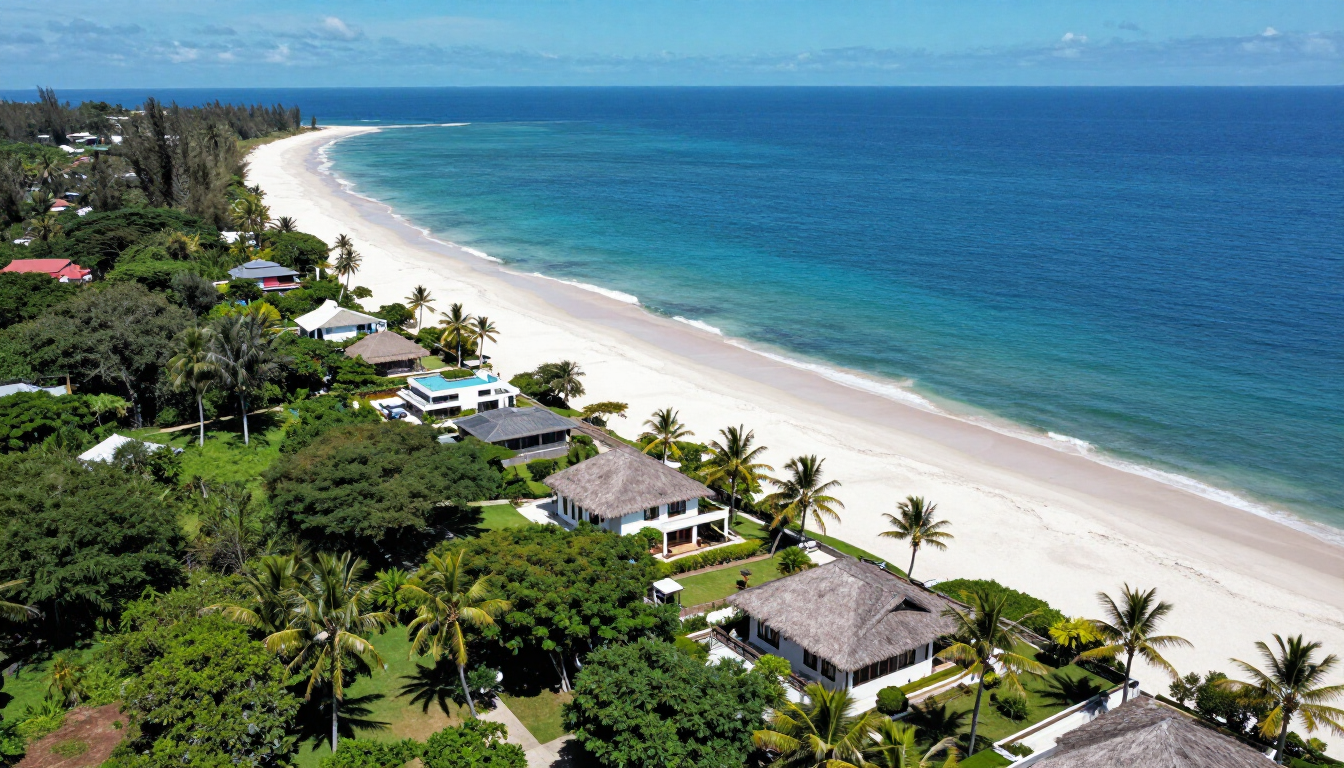
- Turtle Bay: Famous for its long stretches of white sand and proximity to the Marine Park. This is prime real estate for holiday villas like VILLA LUNA .
- Garoda Beach: Often cited as the most beautiful beach in Kenya. Properties here, such as the LUX BEACHFRONT VILLA , command the highest rental rates and resale values.
- Mida Creek: Ideal for those seeking tranquility, nature, and sunset views. It is popular for eco-villas and boutique retreats like the Karabà Luxury Eco Residence .
- Ocean Breeze: A rapidly developing area that offers a mix of modern apartments and private villas, providing great value for first-time investors.
- Watamu Village/Town Center: Perfect for those who want to be within walking distance of Italian gelaterias, local boutiques, and the vibrant local culture.
Title Deed Verification and Legal Due Diligence
When buying a villa in Watamu , the importance of title verification cannot be overstated. You must ensure that the "Paper Title" matches the "Ground Reality." Our team at Malindi Watamu Agenti Immobiliari provides comprehensive support for this phase.
Key documents your lawyer must verify include:
- The Official Search: Confirms the current registered owner and any caveats or liens.
- Land Rent & Rates Clearances: Ensures the seller has paid all annual dues to the National and County governments. If these are unpaid, the transfer cannot proceed.
- The Mutation Survey Map: A surveyor may be required to confirm the physical boundaries of the land match the survey records in Nairobi or Mombasa.
- KRA PIN of the Seller: Necessary for tax purposes and to ensure the seller is a legitimate taxpayer in Kenya.
What are the legal requirements for foreign buyers?
Beyond the property itself, foreign buyers need to fulfill certain personal legal requirements to facilitate a property transaction in Kenya.
First, you will need a Kenya Revenue Authority (KRA) PIN . This tax identification number is mandatory for paying Stamp Duty and registering the transfer of land. Getting a PIN does not necessarily make you a tax resident, but it is a requirement for any major financial transaction in the country.
Secondly, you must have a valid passport and, in some cases, a witness who can verify your identity during the signing of the transfer documents. If you are not physically present in Kenya, many of these processes can be handled via a Power of Attorney (POA) through your lawyer, though we always recommend visiting your potential investment in person at least once. You can book a viewing with us to coordinate your visit.
What are the hidden costs of purchasing real estate in Kenya?
When budgeting for your villa, remember that the purchase price is only one part of the equation. You should factor in approximately 6% to 9% of the purchase price for additional costs:
- Stamp Duty: This is the largest additional cost. For urban/leasehold properties, it is usually 4% of the property value (as determined by a government valuer).
- Legal Fees: Expect to pay between 1% and 2% plus VAT. The Law Society of Kenya (LSK) sets minimum scales for these fees.
- Valuation Fees: A small fee paid to the government valuer to assess the property for stamp duty purposes.
- Agency Fees: Usually 3% of the purchase price, often paid by the seller, but it is important to clarify this at the start of the negotiation.
- Registration Fees: Nominal fees paid to the Land Registry for the final processing of the new title deed.
Investment Potential of Watamu Holiday Homes
Why is buying a villa in Watamu currently one of the smartest moves in African real estate? The answer lies in the unique combination of lifestyle and financial returns.
Watamu has transitioned from a sleepy fishing village into a global tourism hotspot. With the expansion of Malindi International Airport and improved road networks from Mombasa, accessibility has never been better. High-end villas can achieve significant occupancy rates throughout the year, especially during the "Peak Season" (December-January) and the "Italian Season" (August).
Investors often see rental yields of 5-8% annually, coupled with property appreciation that has consistently outpaced inflation over the last decade. Furthermore, the growing expatriate community and the rise of remote work have increased demand for long-term rentals, providing a stable alternative to the holiday market.
Summary of Buying a Villa in Watamu
Navigating the Watamu property market is a rewarding experience when you have the right team by your side. By understanding the legal distinctions of leasehold ownership, performing due diligence, and choosing the right location, you can secure a stunning coastal home and a profitable asset.
Key Takeaways:
- Ownership: Foreigners can own land via 99-year renewable leaseholds.
- Location Matters: Choose between the high rental demand of Garoda/Turtle Bay or the peace of Mida Creek.
- Due Diligence: Never skip a land search or a boundary verification.
- Budgeting: Always include 7-9% for taxes and legal fees on top of the purchase price.
- Professional Help: Use a registered agent and a certified Kenyan lawyer for all transactions.
If you're ready to start your journey, browse our current Our Listings or learn more about Our Services to see how we can assist you in finding your dream villa in Kenya.