


Can a Foreigner Own Freehold Land in Kenya?
A Strategic Legal Guide for Property Buyers in Malindi & Watamu

Why This Question Matters So Much in Kenya 🇰🇪
One of the most misunderstood aspects of buying property in Kenya—especially in coastal towns like Malindi and Watamu—is land ownership by foreigners.
Many international buyers assume that purchasing land works the same way it does in Europe or North America. Unfortunately, this assumption has led to serious legal disputes, invalid titles, and lost investments.
So let’s answer the question clearly, legally, and without confusion:
Can a foreigner own freehold land in Kenya?
Short Answer:
No. Foreigners cannot legally own freehold land in Kenya.
Instead, non-citizens are limited to leasehold ownership for a maximum of 99 years, as defined by the Constitution of Kenya.
This guide breaks down:
- What the law actually says
- How it applies specifically to Malindi & Watamu
- The difference between freehold and leasehold
- Legal workarounds that are legal vs those that are dangerous
- What foreign buyers must do to protect themselves
What Does Kenyan Law Say About Foreign Land Ownership?

The Constitutional Rule (Article 65)
Kenya’s 2010 Constitution is very clear:
A person who is not a Kenyan citizen may hold land only on a leasehold basis, and such lease shall not exceed 99 years.
This means:
- Freehold land is reserved for Kenyan citizens
- Any land interest held by a foreigner cannot exceed 99 years
- Even if a title appears “freehold,” the law overrides it
Freehold vs Leasehold in Kenya (Simple Explanation)
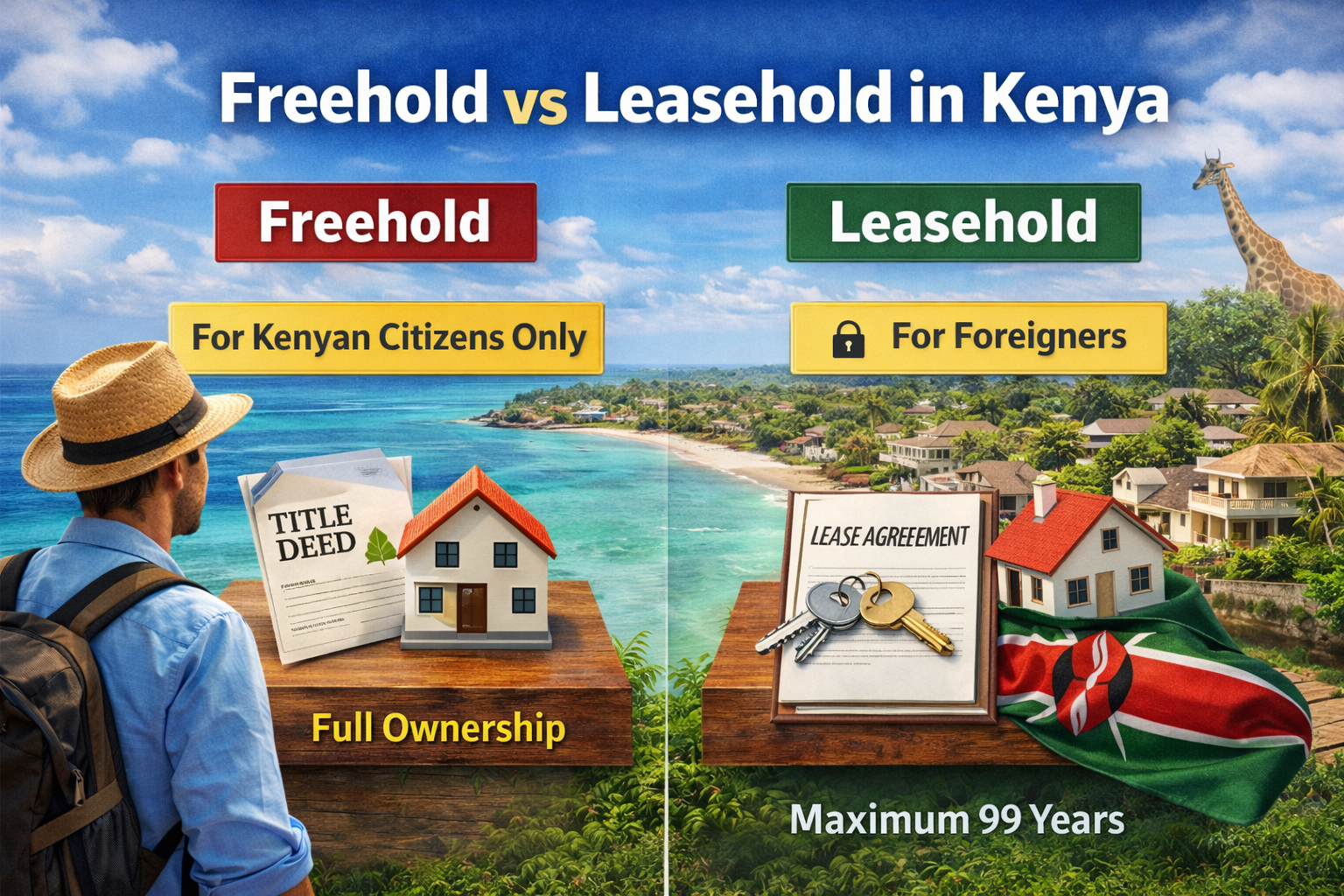
What Is Freehold Land?
- Permanent ownership
- No expiry date
- Full rights over the land
- Only for Kenyan citizens or 100% Kenyan-owned companies
What Is Leasehold Land?
- Ownership for a fixed period (usually 99 years)
- Renewable (subject to government approval)
- Can be sold, transferred, or developed
- The only legal option for foreigners
Important:
If a foreigner acquires land registered as freehold, the law automatically converts it into a 99-year lease.
Does This Rule Apply in Malindi & Watamu?
Yes — 100%.
Malindi and Watamu fall under Kilifi County, and national land laws apply fully.
In fact:
- The Malindi Land Registry has been one of the most active in enforcing land compliance
- The government has publicly confirmed that foreigners cannot hold freehold titles
- Titles have been reviewed, converted, and in some cases challenged
What This Means for Coastal Buyers
Most properties marketed to foreigners in Watamu and Malindi are:
- 99-year leasehold plots
- Leasehold villas
- Apartments under sectional or strata titles (still lease-based)
Can a Foreigner Use a Company to Own Freehold Land?
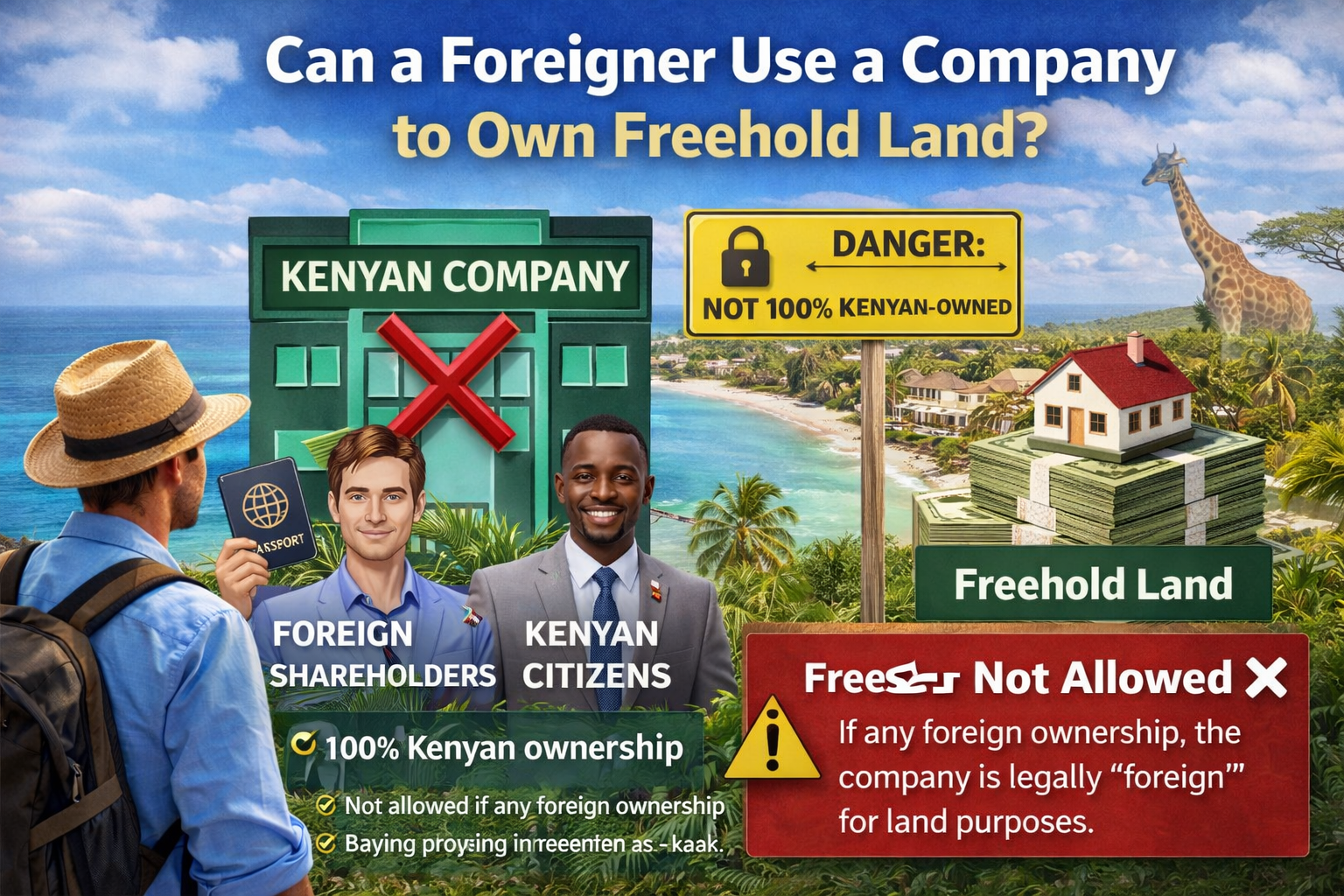
This is one of the most dangerous misconceptions.
The Truth:
A company can only own freehold land in Kenya if:
- It is 100% owned by Kenyan citizens
If:
- Even
1 share is owned by a foreigner
The company is legally classified as foreign
What About Nominee Shareholders or Trusts?
Illegal and risky
Kenyan authorities actively reject:
- Nominee arrangements
- Front companies
- Trusts designed to bypass land laws
These setups often collapse during resale, inheritance, or disputes.
What About Apartments & Condominiums?
Foreigners can legally buy apartments in Kenya, including in Watamu and Malindi.
However:
- The land beneath the apartment is still governed by leasehold rules
- The ownership structure must comply with Kenyan land and sectional property laws
Buyers should verify:
- Lease term remaining
- Management company structure
- Land registry compliance
What Happens When a 99-Year Lease Expires?

This is a common concern — and a valid one.
Key Points:
- Leases are renewable, but renewal is not automatic
Renewal terms should be:
- Clearly written into the original lease
- Negotiated early (not at expiry)
Government policy generally supports renewal for legitimate developments, but legal drafting is critical.
Step-by-Step Checklist for Foreign Buyers (Malindi & Watamu)
- Confirm the land tenure at the Malindi Land Registry
- Verify the lease term (remaining years matter for value)
- Check for title conversions or notices
- Confirm zoning (agricultural land has extra restrictions)
- Use a qualified Kenyan property lawyer
- Register the lease properly after transfer
- Avoid “too good to be true” ownership promises
Common Red Flags to Avoid
- “You’ll own it forever” (false for foreigners)
- “We’ll put it in a Kenyan friend’s name”
- “This is a special freehold exception”
- Missing or unregistered lease documents
- No official land registry search
Why Leasehold Is Not a Bad Deal (If Done Correctly)
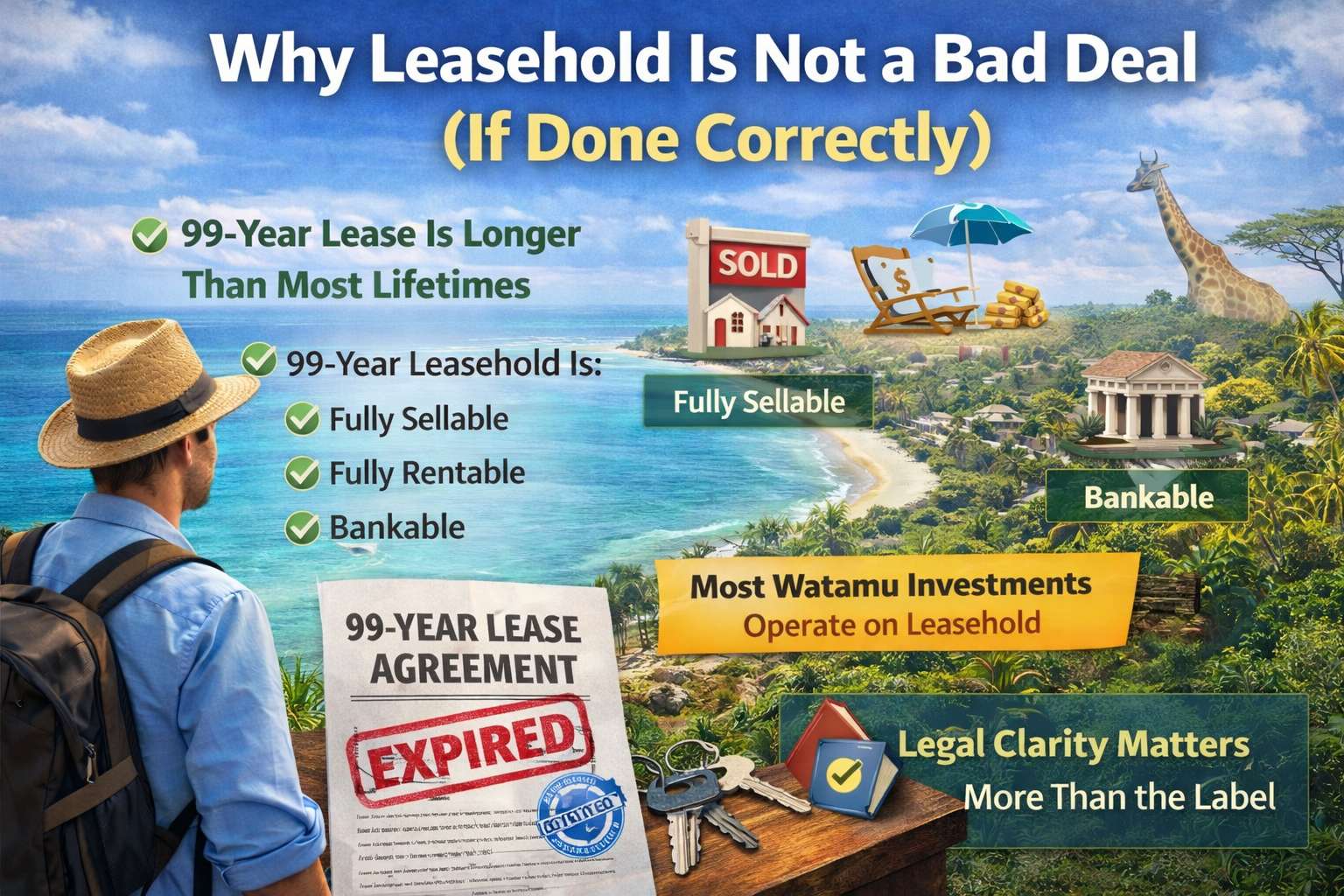
Many international buyers fear leasehold unnecessarily.
In reality:
- 99 years is longer than most people’s lifetime
Leasehold properties are:
- Fully sellable
- Fully rentable
- Bankable
Most high-end developments in Watamu operate on leasehold
What matters is legal clarity, not the label.
FAQs: Foreign Property Ownership in Kenya
Can a foreigner own freehold land in Kenya?
No. Foreigners are constitutionally limited to leasehold ownership of up to 99 years.
Can foreigners buy land in Watamu or Malindi?
Yes, but only on a leasehold basis, usually 99 years.
Can I inherit land in Kenya as a foreigner?
You may inherit, but ownership will still be restricted to leasehold tenure.
Can I renew my lease after 99 years?
Yes, leases are renewable, but renewal terms should be legally secured early.
Can I buy property through a Kenyan company?
Only if the company is 100% Kenyan-owned. Any foreign ownership removes freehold eligibility.
Is leasehold safe for investment?
Yes—if the title is clean, registered, and professionally structured.
Final Verdict: The Smart Way to Buy Property in Kenya as a Foreigner
- Foreigners cannot own freehold land in Kenya
- 99-year leasehold is the legal and safe route
- Malindi & Watamu fully follow national land laws
- Proper legal due diligence protects your investment
If structured correctly, buying property in Kenya’s coastal towns can be secure, profitable, and stress-free.