
7 Land Buying Mistakes in Kenya to Avoid
Land buying mistakes in Kenya can turn a promising investment into a costly dispute. The safest approach is to independently verify the title, complete legal and physical due diligence, confirm boundaries and access, check permitted land use, document every payment, and work with qualified professionals before signing or transferring funds.
1. What is the biggest land buying mistake in Kenya?
The biggest mistake is trusting a seller’s assurances without independently confirming ownership and the property’s legal status. A title deed is important, but it is not the only document or check required before buying land in Kenya.
Ask a qualified advocate or conveyancing professional to verify:
- The registered owner shown in the official land records
- The title number, acreage, tenure and property description
- Existing charges, cautions, restrictions, court orders or claims
- Whether the seller’s identification matches the registered owner
- Whether the seller has authority to transact, especially for company, estate or jointly owned land
A photocopy of a title deed, a search certificate or a seller’s explanation should never replace an official verification process. If the information is inconsistent, pause the transaction until the issue is resolved in writing.
2. Why is an official title search essential?
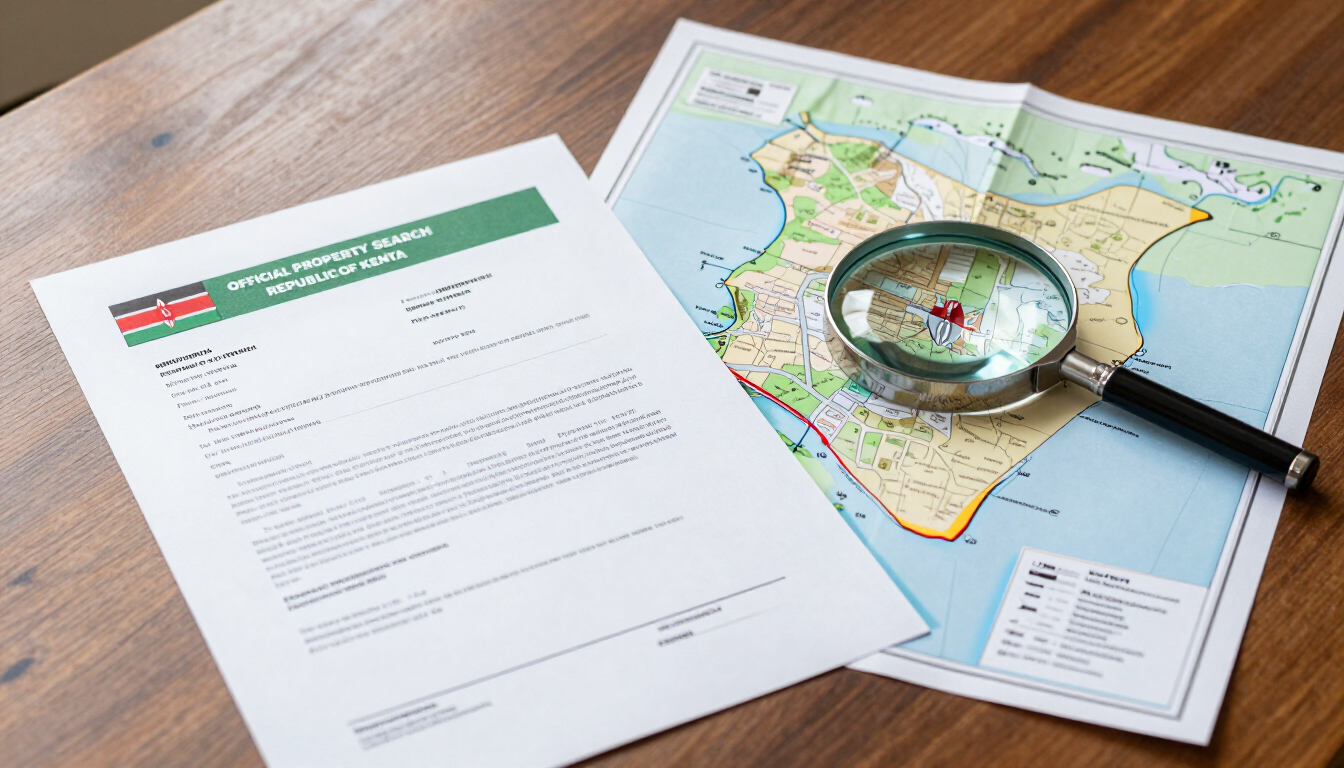
An official search helps confirm what is recorded against the land at the relevant land registry. It can reveal a mortgage, restriction, caution, succession issue or competing interest that may not be visible during a site visit.
The search should be current and reviewed by your advocate. Do not rely on an old search supplied by the seller because the land’s status may have changed since it was issued.
For coastal property, also ask whether there are additional considerations involving public access, riparian areas, leasehold terms, community interests or local planning controls. A beautiful plot near the ocean may have development limitations that are not obvious from the title alone.
3. What does proper land due diligence include?
Due diligence is the process of checking whether the property is legally, physically and commercially suitable for your intended purchase. It should happen before you commit to a final sale agreement or release the full purchase price.
A practical due diligence checklist includes:
- Document review: Check the title, official search, survey documents, rates or rent information, seller identification and any prior agreements.
- Seller verification: Confirm that the seller is the registered owner or has legally valid authority to act for the owner.
- Physical inspection: Visit the site more than once, ideally at different times and with an independent surveyor or trusted property professional.
- Local enquiries: Speak with relevant local authorities and, where appropriate, neighbouring owners to identify disputes, access problems or occupation claims.
- Development assessment: Confirm zoning, planning requirements, utilities, environmental issues, road access and feasibility for your intended project.
Buyers should also compare the documents with the land on the ground. A title may describe a certain size or location, while fences, occupation, roads or neighbouring development suggest a different reality.
For additional guidance about available opportunities, browse our Watamu and Malindi listings , but treat every listing as the start of an enquiry—not a substitute for independent verification.
4. How can boundaries and access create problems?
A buyer may purchase land that appears suitable but later discover that the boundary is incorrectly marked, part of the plot is occupied, or the property has no legally reliable access road.
Before buying, instruct a licensed surveyor to confirm the beacons, measurements and position of the parcel. Do not assume that a wall, hedge, path or informal fence represents the registered boundary.
Confirm these points on site:
- The location and condition of boundary beacons
- The acreage and dimensions compared with the title or survey plan
- The route and legal status of access roads
- Whether neighbours or third parties are using part of the land
- Whether drainage, utility lines, public reserves or wayleaves affect the plot
Access is especially important in Watamu, Malindi and surrounding coastal areas, where roads can vary significantly by season and location. A plot may be close to the beach or a major road but still require road upgrades, a shared access agreement or additional infrastructure investment.
Ask your advocate to verify access rights in the documents, not only through verbal confirmation from a broker or neighbour.
5. Why are verbal agreements unsafe?
Verbal promises about price, acreage, access, completion dates, included fixtures or development rights are difficult to enforce and can be misunderstood. Important terms should be written into a clear sale agreement prepared or reviewed by a qualified advocate.
The agreement should identify:
- The parties and their verified contact details
- The exact property description and title number
- The purchase price and payment schedule
- Conditions that must be satisfied before completion
- Responsibility for taxes, rates, rent, consent and professional costs
- The completion date and handover requirements
- Remedies if either party defaults
Avoid sending money based only on WhatsApp messages, an unsigned quotation or a promise that documents will be provided later. Written records are useful, but they should support—not replace—a properly drafted contract.
If you are a diaspora or international buyer, use professionals who can explain each document and transaction stage clearly. Never sign a document you do not understand or feel pressured to approve remotely.
6. Which land-use restrictions should buyers check?
A plot’s permitted use may not match your intended plan. Residential, commercial, agricultural, tourism, conservation and mixed-use projects can each involve different approvals and conditions.
Before purchasing, ask the relevant authority or planning professional to confirm:
- Current zoning and permitted development density
- Building lines, height limits and setbacks
- Environmental or coastal regulations
- Requirements for change of user or subdivision
- Water, wastewater, electricity and road obligations
- Whether the proposed project requires special licences or approvals
This matters greatly on the Kenyan Coast. A buyer planning villas, apartments, a hospitality project or a commercial centre should assess planning and environmental requirements before negotiating a final price.
Do not calculate your investment only from the size and location of the land. Calculate it from what can legally and practically be built there.

7. What should you confirm before paying?
Payment should follow a documented transaction plan. Buyers should understand exactly what each instalment secures and which conditions must be met before money is released.
Before paying a deposit or balance, confirm that:
- The seller and title have passed independent checks
- The sale agreement has been signed by the correct parties
- Any required consent or authority has been obtained or planned
- The payment instructions have been verified directly with the intended recipient
- The deposit is refundable or protected if agreed conditions fail
Use traceable payment methods and keep receipts, bank confirmations, correspondence and copies of signed documents. Never transfer funds to an unrelated third party simply because the request appears urgent.
A careful payment schedule can protect both parties by linking instalments to measurable milestones, such as successful searches, signed contracts, consent, completion documents and registration.
8. Why should you use qualified professionals?
Land transactions combine legal, surveying, planning, financial and practical issues. One person may not be qualified to assess all of them.
A strong professional team may include:
- A property advocate to review ownership, contracts and completion
- A licensed surveyor to verify boundaries and acreage
- A planner or architect to assess development potential
- A valuer to test whether the asking price is reasonable
- A reputable real estate consultant to provide local market context
The professional should represent your interests and disclose any relevant conflict. A seller’s representative can provide useful information, but the buyer should still obtain independent legal and technical advice.
At Malindi Watamu Agenti Immobiliari Real Estate , buyers can also learn about the firm’s local approach and available real estate services . For a land-specific enquiry, use the land inquiry page and provide your intended use, preferred location, approximate size and budget.
Coastal checks for Watamu and Malindi buyers
Watamu and Malindi offer strong appeal for residential, tourism and lifestyle investment, but location-specific checks are essential. Before committing, consider:
- Road and seasonal access: Visit during different weather conditions where possible.
- Utilities: Confirm the practical cost and availability of electricity, water, internet and waste management.
- Coastal and environmental controls: Ask whether shoreline, mangrove, creek, conservation or riparian rules affect the parcel.
- Neighbourhood development: Review nearby construction, traffic, noise, security and future infrastructure plans.
- Ownership structure: Understand leasehold terms, renewal conditions and any applicable consent requirements.
- Exit strategy: Consider whether the land will be easy to develop, resell, lease or transfer to your intended market.
For example, a waterfront opportunity such as the Prime Waterfront Creek Plot in South Watamu may have exceptional potential, but waterfront location makes professional checks even more important. The same principle applies whether you are buying a small residential plot or assembling land for a larger project.
A buyer’s final checklist
Before signing or transferring the full purchase price, ask yourself:
- Have I independently confirmed ownership and encumbrances?
- Has a surveyor checked the boundaries, acreage and access?
- Is my intended use permitted and financially realistic?
- Are every promise, cost and deadline recorded in the agreement?
- Have qualified professionals reviewed the transaction?
If any answer is “no,” the next step is usually more verification—not faster payment.
Conclusion: how to avoid land buying mistakes in Kenya
The safest way to buy land in Kenya is to slow down and verify every important fact. Confirm the title and seller, complete legal and physical due diligence, inspect boundaries and access, investigate land-use restrictions, document the agreement and use independent qualified professionals. These steps are particularly valuable in Watamu, Malindi and other coastal locations, where access, planning, environmental and tenure issues can affect value. Start by defining your intended use and budget, then request the documents and professional checks needed to make an informed decision before committing funds.