How to Buy Land in Watamu for a Resort
Buying land in Watamu for resort development requires more than finding a beautiful coastal plot. Investors should verify location, access, utilities, title ownership, planning permissions, environmental constraints, tourism demand, and total development costs before committing. A structured due-diligence process helps identify viable sites and avoid expensive legal, operational, and construction risks.
Why is Watamu attractive for resort development?
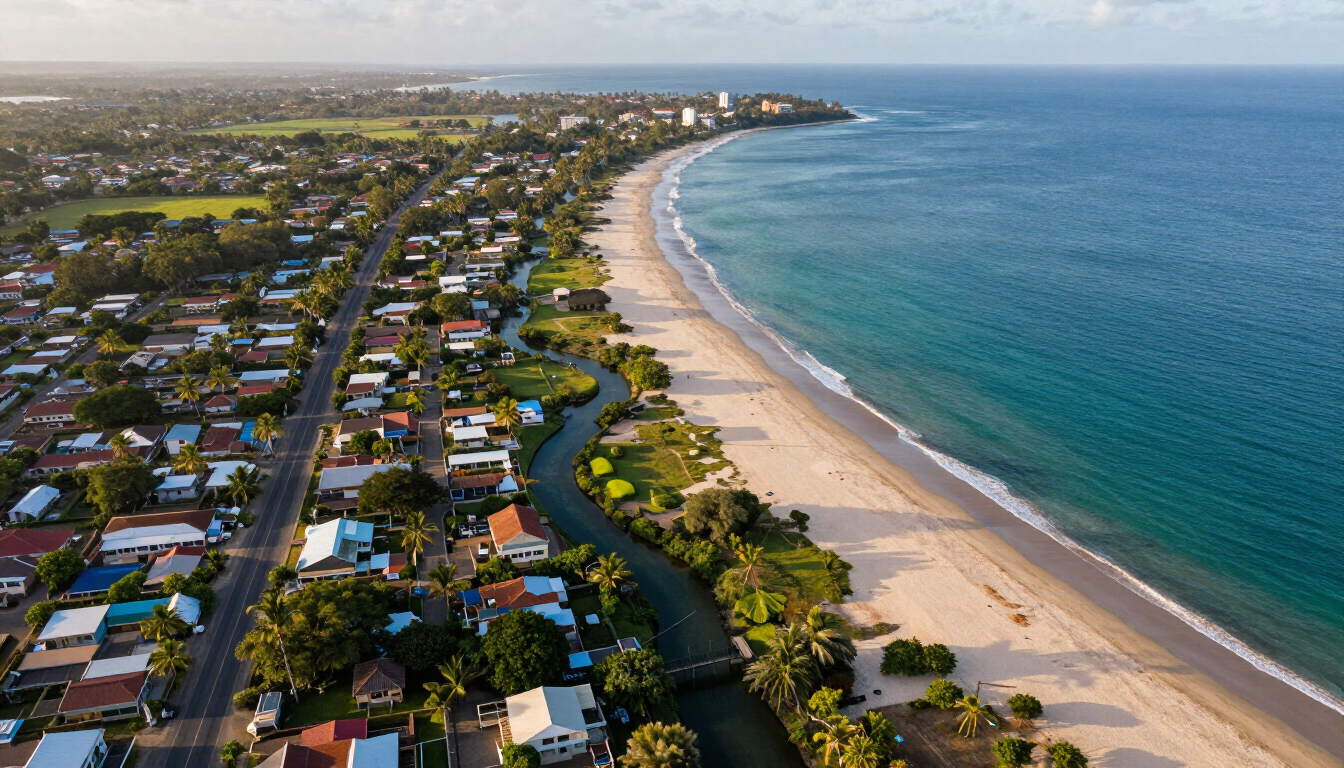
Watamu combines beaches, marine experiences, nature, accessibility, and an established hospitality market. Its appeal extends beyond traditional beach tourism, creating opportunities for boutique hotels, eco-resorts, serviced villas, wellness retreats, restaurants, and mixed-use hospitality projects.
Before assessing a specific plot, consider the wider investment environment:
- Tourism appeal: Watamu offers beaches, marine activities, wildlife, restaurants, and a relaxed coastal lifestyle.
- Product flexibility: Sites may suit boutique accommodation, luxury villas, family resorts, wellness concepts, or eco-tourism.
- International demand: The area attracts Kenyan buyers, diaspora investors, European visitors, and international property owners.
- Existing market knowledge: A developed hospitality ecosystem can support staffing, suppliers, management, and guest services.
- Long-term positioning: Well-located land may benefit from future demand for distinctive, sustainable coastal accommodation.
Reviewing our listings in Watamu and Malindi can help investors compare the character, scale, and positioning of existing properties before choosing a development site.
How should you evaluate a location in Watamu?
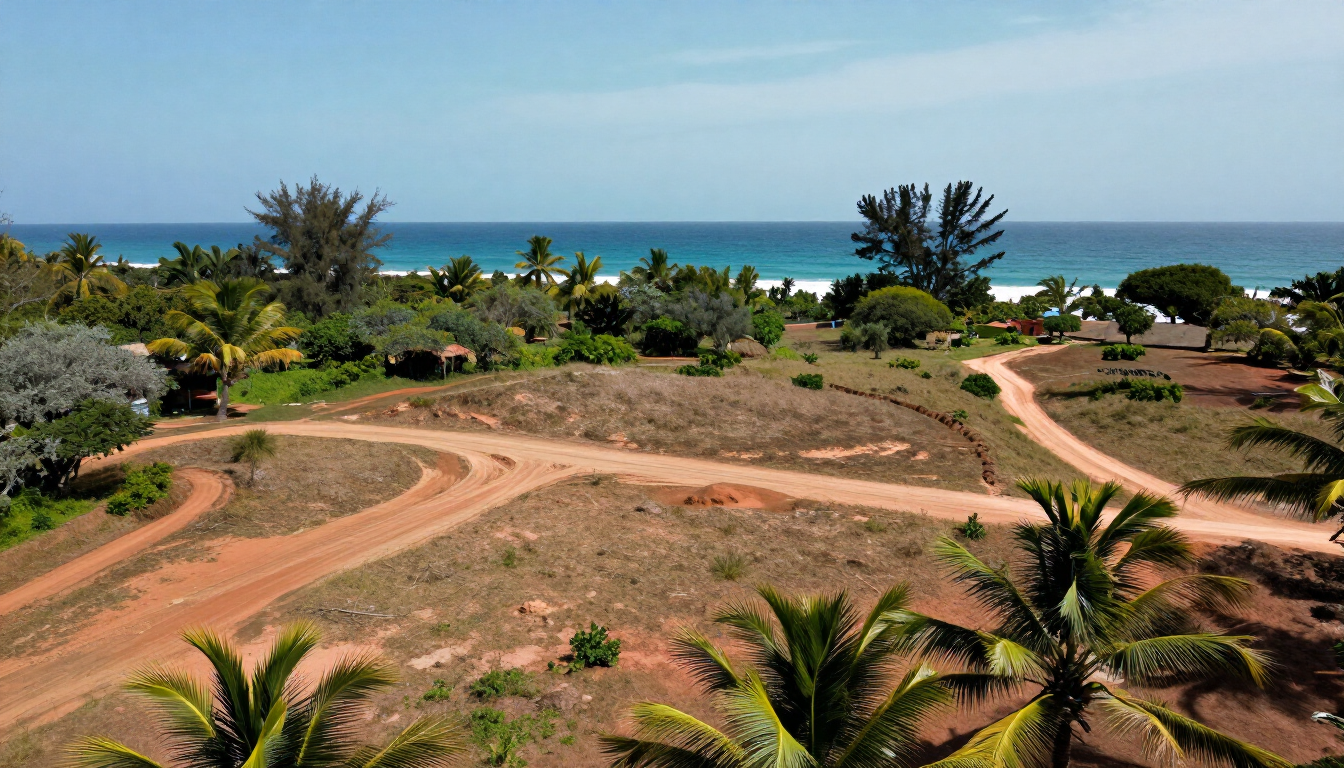
Location should be assessed as an operating asset, not simply as a scenic view. A plot that looks attractive during a viewing may be difficult to develop or commercially weak if guests cannot reach it easily, services are distant, or nearby land uses conflict with the proposed project.
Evaluate the following:
- Distance to the beach or creek: Waterfront proximity can support pricing, but it may also increase environmental, erosion, and access considerations.
- Road quality: Confirm whether the approach road is usable throughout the year, including during heavy rains.
- Guest convenience: Consider travel time from airports, Malindi, local attractions, restaurants, and essential services.
- Noise and privacy: Check nearby businesses, public access routes, construction activity, and future development.
- Views and orientation: Study sun exposure, prevailing winds, drainage, privacy, and the long-term likelihood of view obstruction.
- Neighbouring land uses: Confirm whether surrounding plots contain homes, farms, conservation areas, commercial premises, or undeveloped land.
A site visit should take place at different times of day and, where possible, in both dry and wet conditions. Speak with nearby residents and local professionals, but treat informal statements as preliminary information rather than legal confirmation.
What plot size is suitable for a resort?
There is no universal ideal plot size. The right area depends on the number of rooms, villas, restaurants, pools, staff facilities, parking, roads, landscaping, wastewater systems, service areas, and conservation commitments.
A small boutique project may work on a compact, well-serviced site. A low-density eco-resort may require substantially more land because buildings are spread across gardens, natural habitat, or coastal vegetation. The development brief should be prepared before making an offer.
Define these requirements early:
- Target number of keys, villas, or residences
- Average room and public-area sizes
- Parking and internal circulation needs
- Pool, restaurant, spa, conference, and recreation facilities
- Staff accommodation and back-of-house areas
- Water storage, wastewater treatment, and solid-waste facilities
- Required landscaped or protected areas
- Expansion potential for a later development phase
Do not assume that the entire registered plot can be built on. Setbacks, easements, planning controls, riparian or coastal restrictions, drainage corridors, and environmental conditions may reduce the usable development area.
Which infrastructure checks matter before buying land in Watamu?
Infrastructure can determine whether an apparently affordable plot becomes an efficient investment or an expensive construction challenge. Confirm the actual availability, capacity, connection cost, and reliability of each service.
Access and roads
Establish who controls the access road and whether the route is legally documented. A road used informally by residents may not provide a secure right of access. Confirm its width, condition, maintenance responsibility, and ability to accommodate construction vehicles, guests, deliveries, and emergency services.
Electricity
Ask the relevant provider and qualified advisers about the nearest connection point, transformer capacity, connection timeline, and likely cost. A resort may also require backup generation, solar power, battery storage, or a hybrid system.
Water
Investigate the available water source, quality, reliability, storage needs, and approvals. Depending on the site, a project may need a public connection, borehole assessment, rainwater harvesting, treatment, or a combination of systems.
Wastewater and drainage
A hospitality project needs a properly designed wastewater solution. Confirm soil conditions, groundwater levels, flood exposure, drainage patterns, and the feasibility of treatment systems. Poor drainage can affect construction, guest experience, landscaping, and environmental compliance.
Connectivity and services
Reliable internet and mobile coverage increasingly influence resort operations and guest satisfaction. Also assess proximity to healthcare, food suppliers, maintenance contractors, security services, and skilled labour.
What documents should you verify before buying coastal land?
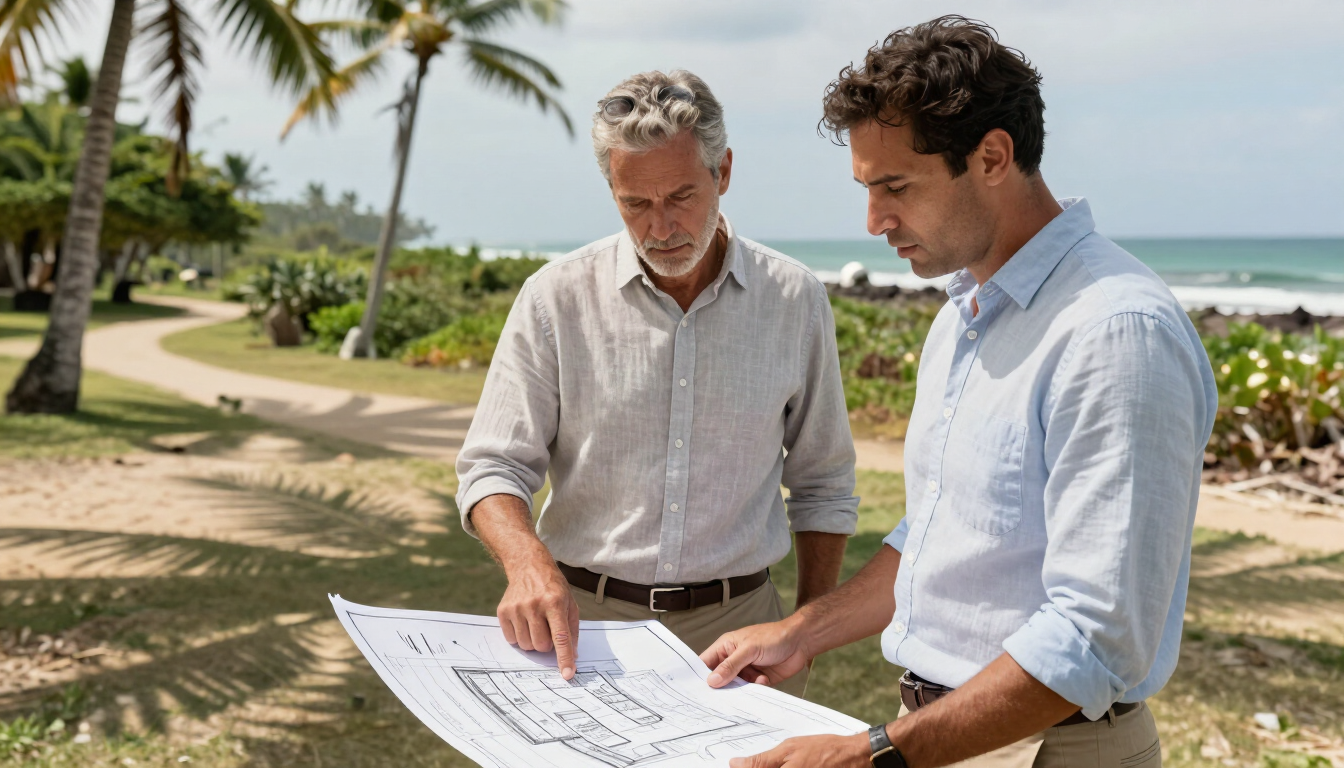
Document verification should be handled with an independent Kenyan property lawyer and the appropriate land authorities. Never rely solely on a seller’s copy of a title, a previous agreement, or an agent’s verbal assurance.
The legal review should typically consider:
- Original or certified title documentation
- Official search confirming the registered owner and encumbrances
- Survey plan, deed plan, beacon certificate, and boundary position
- Land rates and rent status, where applicable
- Existing charges, cautions, restrictions, leases, or court disputes
- Access rights and registered easements
- Seller identity, authority to sell, and corporate ownership records
- Spousal, succession, trustee, or shareholder considerations where relevant
- Planning, zoning, and permitted land-use information
- Consents required for transfer or development
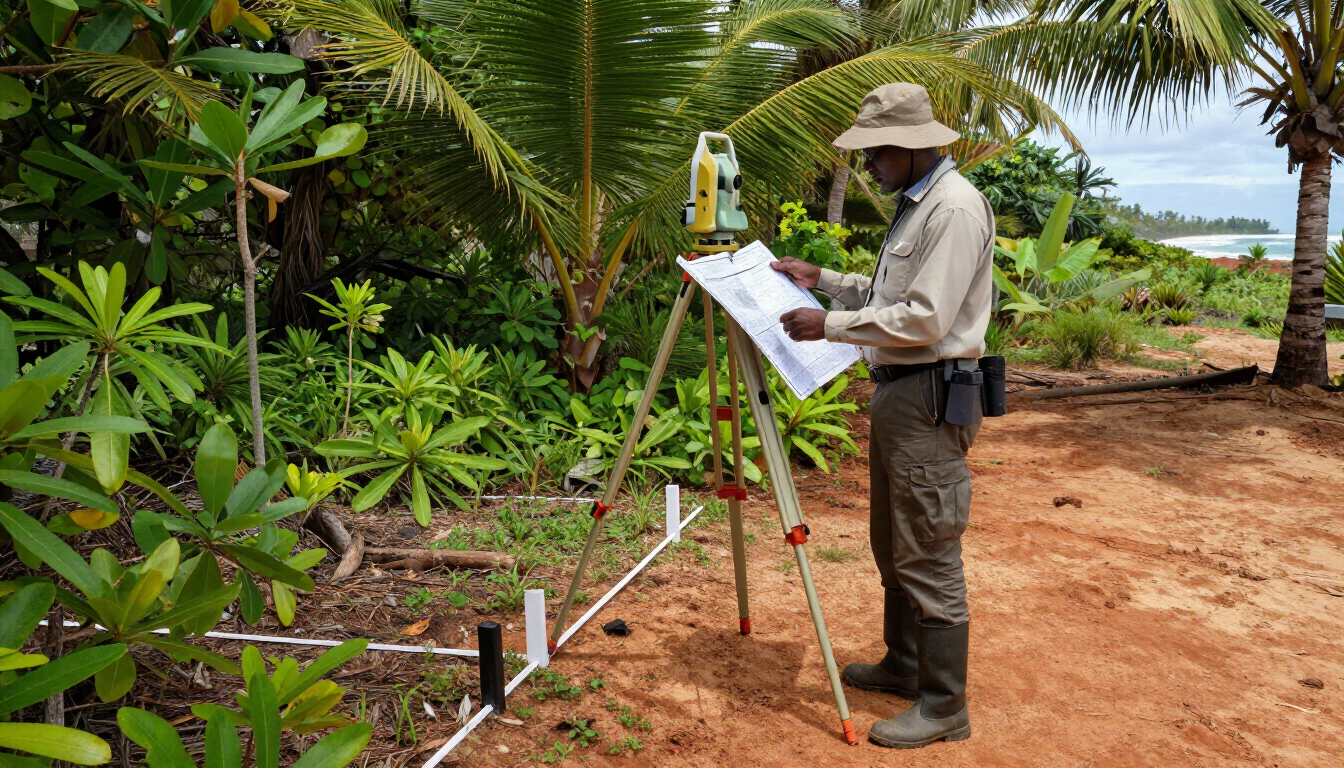
A professional surveyor should verify the boundaries on the ground. Boundary disagreements can delay a project, affect financing, and reduce the usable area. Ensure the physical features match the survey documents and that neighbouring structures have not crossed the boundary.
Investors unfamiliar with the Kenyan process can begin with a land inquiry and then appoint independent legal, survey, planning, and environmental advisers.
Is the land suitable for a hotel or eco-resort?
Ownership is only the first threshold. Development suitability depends on whether the proposed concept can be legally approved, physically constructed, commercially operated, and environmentally managed.
Request a preliminary feasibility assessment covering:
- Zoning and permitted hospitality or residential use
- Building setbacks, height, density, and coverage limits
- Coastal, marine, wetland, creek, or riparian restrictions
- Soil bearing capacity and geotechnical conditions
- Flooding, erosion, stormwater, and sea-level exposure
- Vegetation, wildlife, nesting areas, and habitat sensitivity
- Construction access and material delivery routes
- Fire safety, public health, sanitation, and accessibility requirements
- Expected approval pathway and professional fees
For an eco-tourism concept, environmental performance should be designed from the beginning. Consider low-impact siting, native landscaping, water efficiency, renewable energy, responsible wastewater treatment, waste reduction, and protection of natural coastal features.
Do not market a project as “beachfront,” “waterfront,” or “private beach” without verifying the legal position. Coastal access and public rights may impose important limitations on construction and guest operations.
How do you assess tourism and investment potential?
A successful resort depends on demand, not only land appreciation. Build a simple feasibility model using realistic assumptions rather than optimistic occupancy or nightly-rate projections.
Assess:
- Target guests, including leisure travellers, families, wellness visitors, digital nomads, events, or long-stay guests.
- Competing properties and their rates, reviews, facilities, occupancy patterns, and seasonal performance.
- Access from key markets and the likely guest journey from arrival to check-in.
- Seasonality, weather, school holidays, international travel cycles, and local events.
- Staffing, management, maintenance, marketing, insurance, utilities, and security costs.
- Construction cost, professional fees, financing, taxes, approvals, contingency, and operating reserves.
Compare the land opportunity with existing accommodation and branded residences in the area. For example, reviewing properties such as Karabà Luxury Eco Residence , The Breeze Point Watamu Residence , and Kira Beach Suites Exclusive can provide useful context on positioning, design quality, and the type of product already attracting attention.
A practical due-diligence process
Use a staged process so major risks are identified before significant funds become non-refundable.
- Define the concept: Establish the target guest, accommodation model, capacity, amenities, and sustainability goals.
- Shortlist locations: Compare access, surroundings, beach or creek proximity, infrastructure, and future development risk.
- Review preliminary documents: Obtain title information, survey documents, ownership details, and available planning information.
- Commission independent checks: Instruct a lawyer, surveyor, planner, engineer, and environmental consultant as appropriate.
- Prepare feasibility estimates: Model land, construction, approvals, infrastructure, operations, financing, and contingency costs.
- Make a conditional offer: Link completion to satisfactory legal, technical, environmental, and planning due diligence.
- Complete and register correctly: Use qualified professionals to manage contracts, payments, transfer, and registration.
Keep a written due-diligence file. It should include searches, reports, maps, photographs, correspondence, approvals, assumptions, and unresolved issues.

Common mistakes investors should avoid
- Choosing a plot based only on ocean views
- Assuming a title guarantees development permission
- Underestimating roads, water, power, and wastewater costs
- Paying a deposit before confirming ownership and encumbrances
- Ignoring seasonal access, drainage, flooding, or erosion
- Relying on one adviser for legal, technical, and commercial opinions
- Designing the project before confirming usable site area
- Failing to budget for approvals, taxes, professional fees, and contingency
- Treating environmental compliance as an afterthought
- Assuming nearby development guarantees future returns
Final decision checklist
Before buying land in Watamu for a resort, confirm that:
- The ownership and title position are independently verified.
- Boundaries, access, easements, and encumbrances are understood.
- The site can support the intended scale and concept.
- Water, electricity, roads, drainage, and wastewater solutions are realistic.
- Tourism demand supports the proposed accommodation and pricing.
- Environmental and planning requirements are identified.
- Total project costs and risks have been modelled.
- The sale agreement protects you until due diligence is complete.
Buying land in Watamu can support a compelling hospitality investment when the site, legal position, infrastructure, and business model work together. The best opportunity is not necessarily the cheapest or most scenic plot; it is the one that can be acquired securely and developed responsibly. Start by defining your resort concept, compare suitable locations, and commission independent checks before signing an unconditional agreement. For local guidance, explore our services , About Us , or contact our team to discuss a potential site.