How to Buy Land in Watamu for a Villa
Buying land in Watamu for villa development requires more than finding a beautiful coastal plot. Choose a location that fits your intended use, confirm ownership and title records, verify planning permissions, assess access and infrastructure, and budget for construction, utilities, professional fees, and ongoing management before committing.
Why buy land in Watamu for villa development?
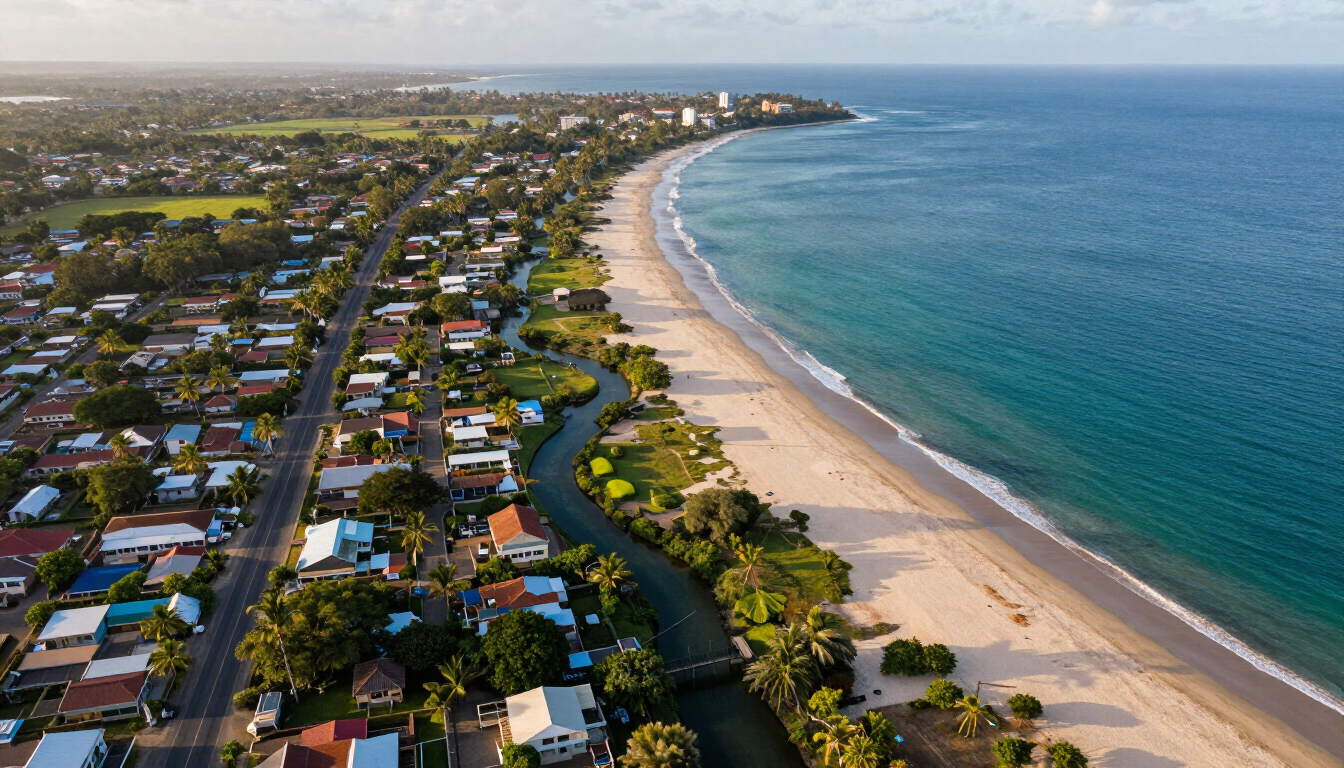
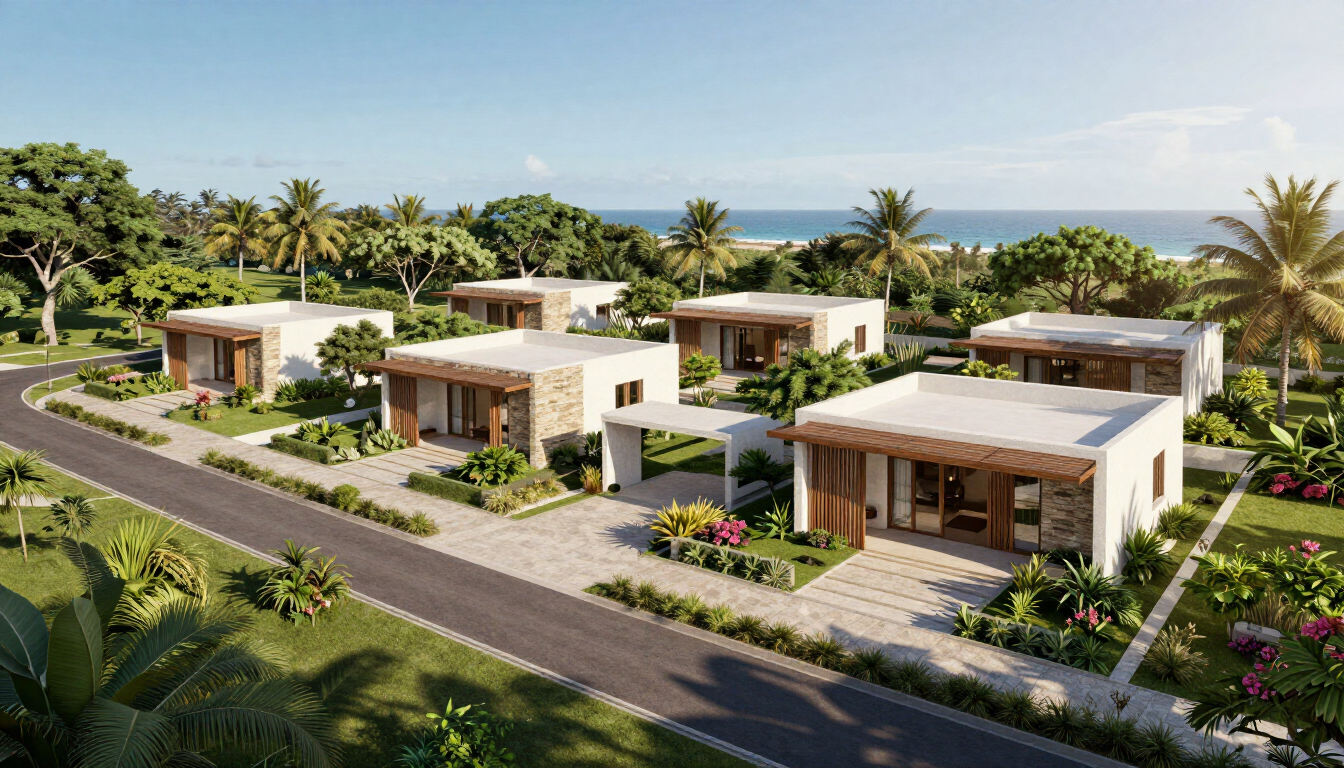
Watamu attracts private buyers, hospitality operators, diaspora Kenyans, and international investors because it combines beaches, marine attractions, a relaxed lifestyle, and growing demand for quality accommodation. Land can provide greater design flexibility than purchasing a completed property: you can create a private villa, holiday home, serviced rental, boutique retreat, or small development around a clear investment strategy.
However, coastal land is not automatically suitable for every project. A plot may look ideal but have limited road access, unclear boundaries, drainage challenges, restrictions on construction, or expensive utility connections. The right purchase balances:
- Location and surrounding environment
- Legal ownership and documentation
- Plot size, shape, and buildable area
- Access, utilities, and infrastructure
- Development costs and expected returns
For a current view of available opportunities, explore our Watamu and Malindi property listings or submit a land inquiry .
Which Watamu location is right for your project?
Different parts of Watamu support different property objectives. Before viewing land, define the experience you want to create and the people you want to attract.
Beachfront and near-beach plots
Plots close to the ocean may offer strong lifestyle appeal and rental potential. They can suit a holiday villa, premium residence, or hospitality concept. At the same time, buyers should investigate coastal regulations, erosion exposure, salt-air maintenance, privacy, road access, and any setback requirements.
Turtle Bay and established residential areas
Established areas can offer better access to roads, shops, restaurants, services, and existing residential communities. They may be suitable for a family villa, second home, or managed holiday rental where convenience is important.
South Watamu and creek-side locations
Creek-facing land can provide views, privacy, and a distinctive natural setting. The design must respond carefully to drainage, wet-season conditions, environmental sensitivities, access, and the practical cost of bringing services to the site. For comparison, review this Prime Waterfront Creek Plot in South Watamu .
Inland and quieter plots
Inland land may offer more space and value, making it attractive for larger gardens, multiple units, staff accommodation, pools, or an eco-conscious development. Confirm travel times, road conditions, security arrangements, and the availability of electricity and water before assuming the lower land price represents a lower total project cost.
How large should a Watamu plot be?
The correct plot size depends on the building brief, not simply the desired number of bedrooms. Prepare a preliminary development schedule before making an offer. Include the main building, parking, swimming pool, gardens, service areas, staff quarters, septic or wastewater systems, water storage, and outdoor entertaining spaces.
A compact plot may work for a carefully designed private villa. A larger plot is usually more flexible for:
- A main villa plus guest accommodation
- Several rental units or a boutique hospitality project
- Landscaping, privacy, and recreational areas
- Future expansion or subdivision, subject to approval
- Parking, service access, and water-management infrastructure
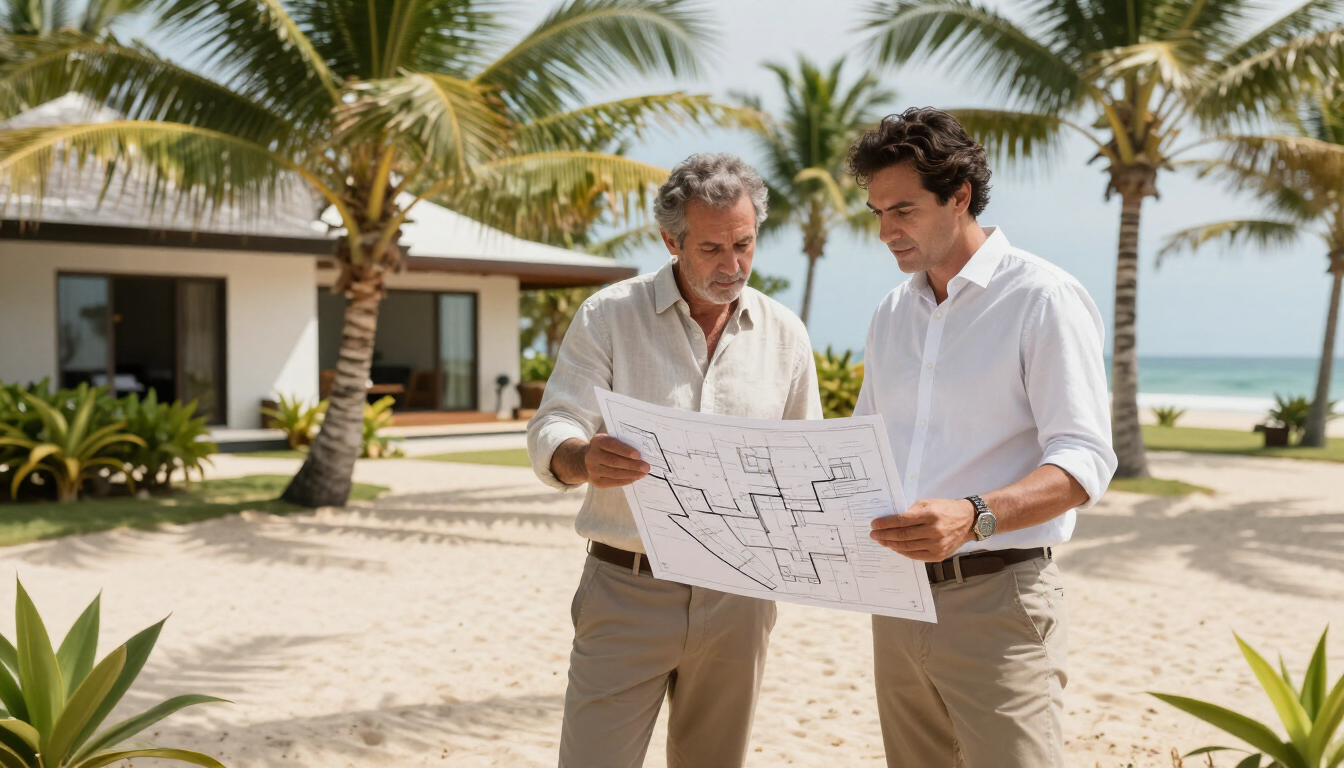
Plot dimensions matter as much as total area. A narrow or irregular parcel may reduce the practical building footprint. Ask an architect or quantity surveyor to test a concept plan before completing the purchase, especially when the project depends on ocean views, multiple units, or a specific villa orientation.
What title and ownership checks are essential?
Document verification is one of the most important steps when buying land in Watamu. Do not rely only on a seller’s copy of a title, a verbal assurance, or a local reputation. Use an independent Kenyan conveyancing advocate to conduct official searches and review the complete transaction.
Typical checks may include:
- Official land search: Confirm the registered owner, parcel details, tenure, encumbrances, charges, cautions, restrictions, or pending interests.
- Title and survey records: Compare the title information with the survey plan, deed plan, registry map, and physical boundaries.
- Seller identity and authority: Confirm that the seller is the registered owner and has legal capacity to transact. For companies, estates, trusts, or representatives, request the relevant authority documents.
- Rates, rent, and approvals: Establish whether land rates, land rent, or other required payments are current and obtain evidence where applicable.
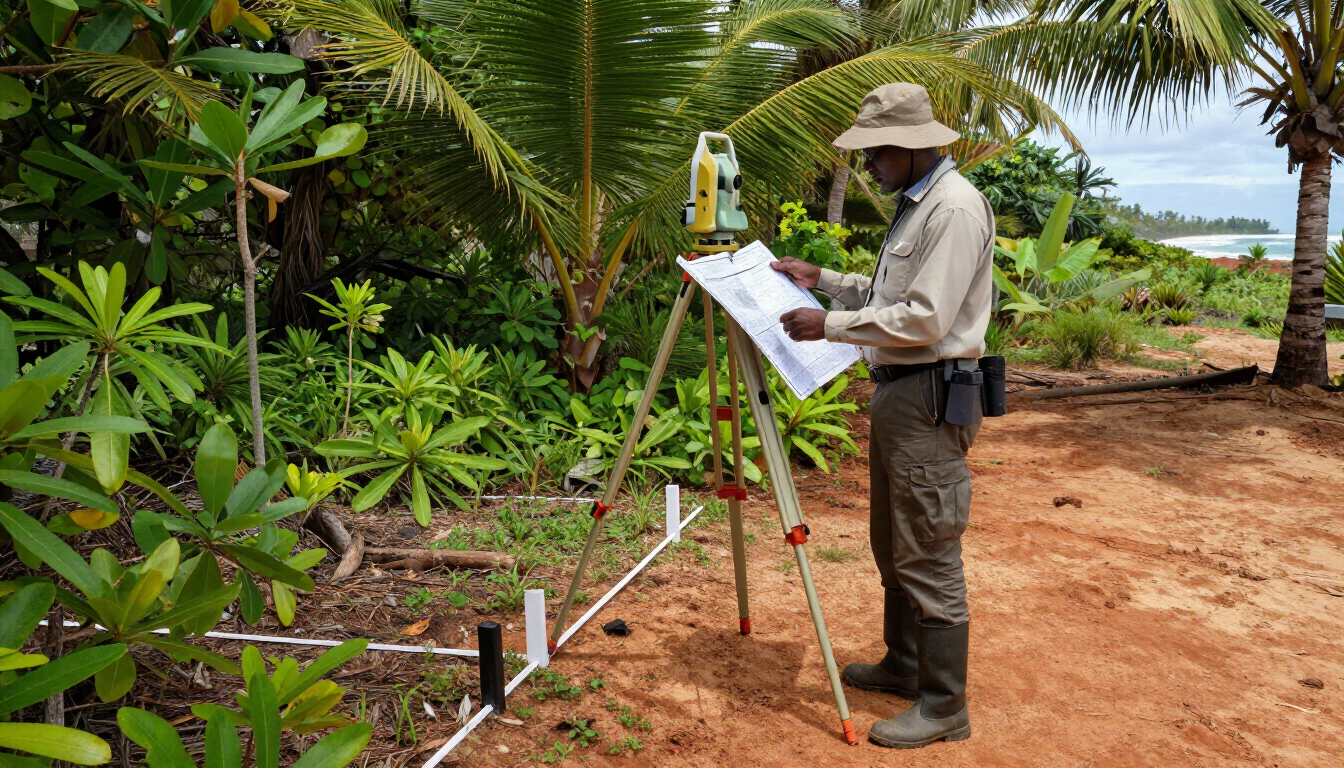
- Boundary verification: Use a licensed surveyor to identify beacons and confirm that the occupied area matches the registered parcel.
- Access rights: Verify that the plot has lawful road access or a registered wayleave rather than relying on an informal route.
Ownership structures and transaction requirements can vary. Foreign buyers should obtain advice on Kenyan land-holding rules, permitted tenure, corporate structures, and any restrictions that may apply to their circumstances. This guide is general information, not legal advice.
What planning and development approvals are needed?
Before designing a villa, confirm that the proposed use is permitted on the parcel. Planning controls may affect residential, commercial, hospitality, mixed-use, density, height, setbacks, parking, environmental management, and subdivision proposals.
Your professional team should help establish:
- The applicable zoning and permitted use
- Building lines, setbacks, height, and coverage limits
- County planning and building approval requirements
- Environmental review or assessment obligations
- Coastal, marine, wetland, creek, or conservation considerations
- Requirements for subdivision, change of user, or consolidation
- Fire, health, sanitation, and access standards for hospitality projects
A private holiday home and a multi-unit rental project may not be assessed in the same way. If your intention is to generate rental income, clarify whether additional approvals, operational licenses, environmental measures, or public-health requirements may apply.
Can the site support reliable access and utilities?
Infrastructure affects both construction cost and the future guest or resident experience. Visit the land in person, ideally during different weather conditions, and ask practical questions rather than assuming nearby services can be connected cheaply.
Assess:
- Road condition throughout the year
- Distance to an all-weather public road
- Electricity availability and connection requirements
- Water source, storage, quality, and reliability
- Internet and mobile network coverage
- Drainage, flooding, and stormwater routes
- Wastewater treatment and septic feasibility
- Security, lighting, and emergency access
- Availability of construction materials and contractors
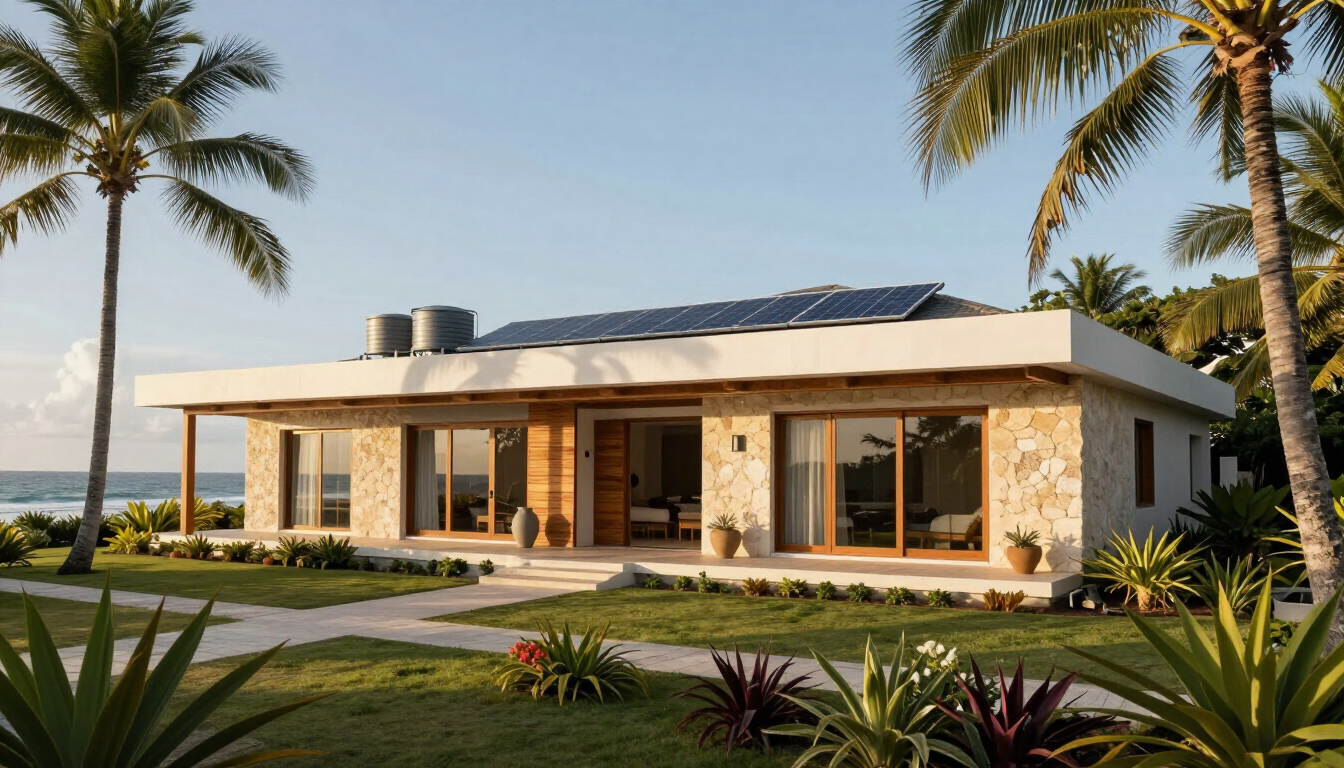
A plot without immediate mains water may need tanks, borehole investigations, rainwater harvesting, or another approved solution. A site with weak electricity access may require a transformer contribution, generator, solar system, or hybrid backup. Include these items in the feasibility budget before comparing land prices.
How much should you budget beyond the land price?
The purchase price is only one part of the investment. A realistic feasibility model should include acquisition costs, professional services, approvals, construction, furnishing, infrastructure, finance, marketing, and contingency.
Potential cost categories include:
- Advocate, due-diligence, valuation, and survey fees
- Stamp duty, registration, rates, and transaction charges where applicable
- Architect, engineer, project manager, and quantity surveyor fees
- Site clearance, soil testing, excavation, foundations, and retaining works
- Road improvement, utility connections, solar, water, and wastewater systems
- Construction materials, labour, finishes, furniture, and appliances
- Pool, landscaping, boundary wall, gate, security, and staff facilities
- Insurance, financing costs, marketing, and operational setup
- Contingency for price changes, delays, weather, and unforeseen ground conditions
Ask a qualified quantity surveyor for an early cost plan based on the concept, specification, access conditions, and location. A coastal villa may require finishes and systems that resist humidity, salt air, intense sun, and heavy rain. Maintenance should be modelled alongside construction cost.
How do you test whether the land is a good investment?
Start with the intended use and measure the site against realistic assumptions. A holiday villa may depend on seasonal occupancy, management quality, online marketing, pricing, and guest access. A private residence may be judged primarily by lifestyle value, privacy, design potential, and resale appeal. A development project requires more detailed revenue, cost, and approval modelling.
Compare at least three scenarios:
- Private use: How much value will the owner receive from living in or visiting the property?
- Short-term rental: What occupancy, nightly rate, management fee, maintenance cost, and seasonal variation are realistic?
- Long-term or mixed use: Could the property support annual rental, selected holiday periods, or a combination?
Do not base returns on the best possible season. Test lower occupancy, construction delays, exchange-rate movement, repairs, vacancy, and management fees. Also consider exit demand: will future buyers value the location, title quality, access, design, and ongoing costs?
For inspiration on the type of finished asset the market may support, explore examples such as Ocean Residence – VR219 and Karabà Luxury Eco Residence . These are reference points, not guarantees of performance.
What is the safest buying process?
A disciplined process reduces avoidable surprises:
- Define the villa or development brief and investment objective.
- Shortlist locations based on access, environment, amenities, and intended use.
- Visit candidate plots and record boundaries, roads, utilities, drainage, and neighbouring activity.
- Engage an independent advocate, licensed surveyor, architect, and—where needed—quantity surveyor.
- Complete official title, ownership, encumbrance, boundary, planning, and access checks.
- Prepare a concept plan and preliminary development budget.
- Negotiate an offer subject to satisfactory due diligence and contract terms.
- Complete the transaction through the appropriate legal and registration process.
- Obtain approvals before construction begins and retain a clear document file.
Avoid making a large non-refundable payment before your legal and technical advisers have completed their checks. Written agreements should clearly address the price, deposit, completion conditions, documents to be supplied, vacant possession where relevant, default provisions, and responsibility for outstanding charges.
Questions buyers often ask
Can foreigners buy land in Watamu?
Foreign ownership and tenure rules depend on the buyer’s status, the type of land, and the proposed structure. Obtain current advice from a qualified Kenyan property advocate before signing or paying a deposit.
Is beachfront land always the best investment?
No. Beachfront land may offer exceptional appeal but can also involve environmental, access, erosion, maintenance, and planning considerations. The best site is the one that matches the intended use and remains viable after all costs and restrictions are assessed.
Should I buy land or a completed villa?
Land offers design control and the opportunity to build around a specific brief, but it requires time, approvals, project management, and construction risk. A completed villa can provide faster use or rental income. Compare total cost, condition, location, legal documentation, and your preferred level of involvement.
Who should help me assess a plot?
Use an independent advocate for legal checks, a licensed surveyor for boundaries, an architect for feasibility and planning, and a quantity surveyor for an early cost estimate. A local real estate professional can assist with market context and suitable opportunities.
Key takeaway
Buying land in Watamu can be an excellent route to creating a private villa, holiday home, rental property, or coastal investment—but only when the site works legally, physically, financially, and operationally. Start with a clear development brief, then test location, plot dimensions, title, access, utilities, approvals, and total project cost. Compare realistic investment scenarios rather than relying on optimistic rental assumptions. Before committing, instruct independent Kenyan legal and technical professionals to verify the land and assess buildability. When you are ready to compare opportunities, contact Malindi Watamu Agenti Immobiliari Real Estate or book a viewing .