How to Verify a Title Deed in Kenya
Before buying land in Kenya, verify the title deed through an official land search, confirm the registered owner and parcel details, check encumbrances and restrictions, inspect boundaries, and review supporting documents with a qualified advocate and licensed surveyor. These steps help protect buyers in Watamu, Malindi, and across the Kenyan Coast.

Why should you verify a title deed before buying land in Kenya?
A title deed is important evidence of registered land ownership, but seeing the document alone is not enough. A title may be genuine while the proposed seller is not the current registered owner, or the parcel may have a loan, court order, caution, restriction, boundary dispute, or other issue attached to it.
Title deed verification is therefore a legal and practical due-diligence process. It should confirm that:
- The seller matches the registered proprietor.
- The parcel number, size, location, and tenure details are consistent.
- No undisclosed charge, caution, restriction, or other encumbrance affects the land.
- The boundaries and access correspond with the official records and physical site.
- The transaction is handled by qualified professionals.
For international buyers, Italian investors, diaspora Kenyans, and first-time purchasers, independent verification is especially important. Do not rely only on a broker, seller, copy of a title, or verbal assurances.
How do you conduct an official land search in Kenya?
An official land search is one of the most important steps when buying land. It is conducted through the relevant Lands Registry or official digital land services, depending on the location and availability of the system.
The search should be requested using the correct parcel number and related property details. Your advocate can help prepare and interpret the application, confirm the responsible registry, and identify any inconsistencies.
A proper search should help establish:
- The name or names of the registered owner.
- The parcel number and registered land reference.
- The approximate registered acreage or size.
- The tenure, such as freehold or leasehold where applicable.
- Registered charges, cautions, restrictions, prohibitions, or other interests.
- Any information that may affect transfer or completion.
Ask for the official search result in writing and retain it with the rest of the transaction file. A search is not a permanent guarantee: records can change, so the advocate should advise whether an updated search is needed shortly before completion and transfer.
What should you check on the title deed?
Compare the title deed with the official search and the sale documents. Important fields include the registered proprietor, title number, parcel number, land size, tenure, issue details, and any references to subdivisions or transfers.
The seller’s identity should be checked against valid identification and, where relevant, company or estate documentation. If the title is held jointly, all required proprietors must participate in the transaction. If a company owns the land, confirm the company’s authority to sell and obtain appropriate corporate records.
Look carefully for differences such as:
- Misspelled names or inconsistent identity details.
- A parcel number that does not match the search result.
- A size that differs from the survey records or sale agreement.
- Alterations, unclear entries, missing pages, or suspicious corrections.
- Lease terms or consent requirements that have not been explained.
A discrepancy does not automatically prove fraud, but it must be explained and independently resolved before money changes hands.
How do you check for encumbrances and restrictions?
An encumbrance is a legal interest or limitation affecting land. Common examples include a bank charge, caution, restriction, court order, matrimonial claim, succession issue, wayleave, easement, or dispute over ownership or access.
The official search should disclose registered interests, but buyers should also ask targeted questions. For example, determine whether the seller has borrowed against the property, whether another person claims an interest, and whether the land is part of an inheritance or ongoing court matter.
Do not agree to complete a purchase based on a promise that a charge or caution will be removed later unless your advocate has documented a safe process. A lender’s formal discharge, registry action, consent, or court documentation may be required before transfer can proceed.
Where land forms part of an estate, verify the grant of representation and confirm that the personal representatives have authority to sell. Where consent from an authority or spouse may be required, obtain professional advice before signing.
Why do boundaries and a survey matter?
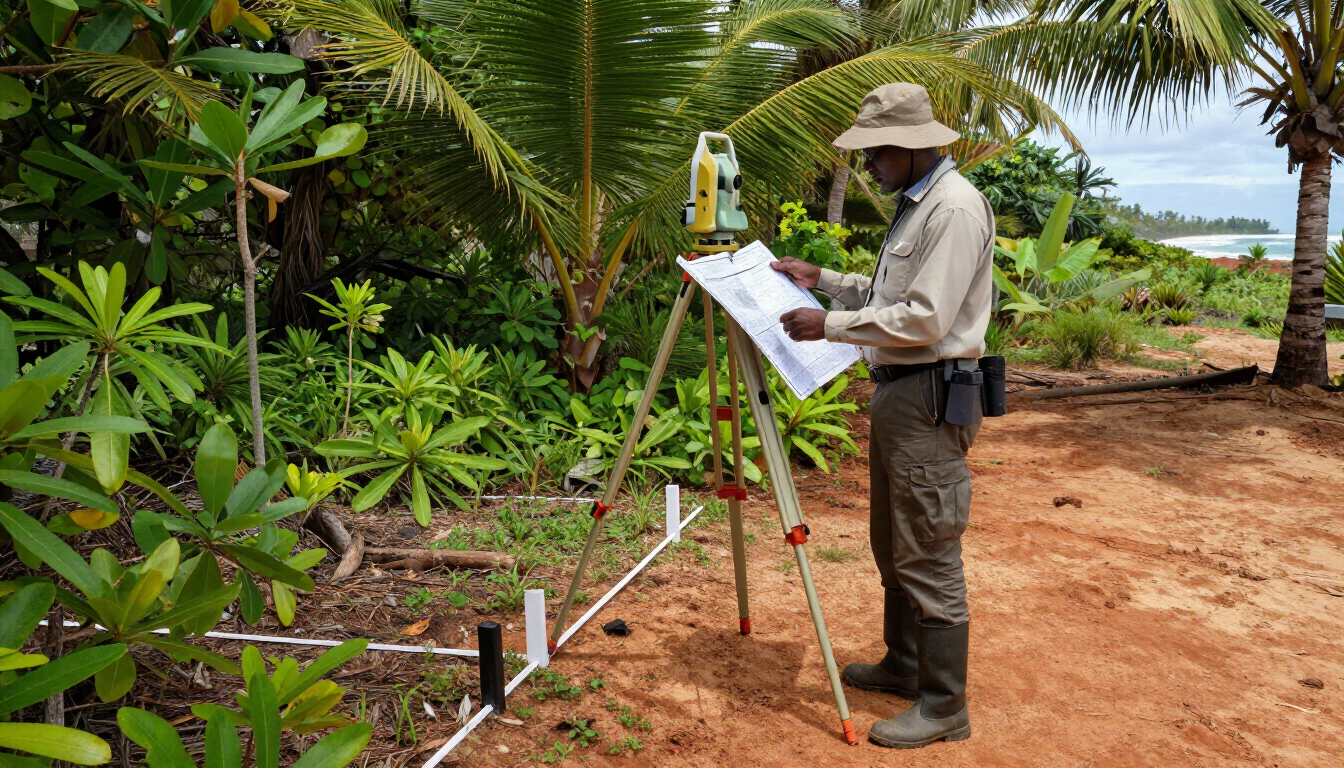
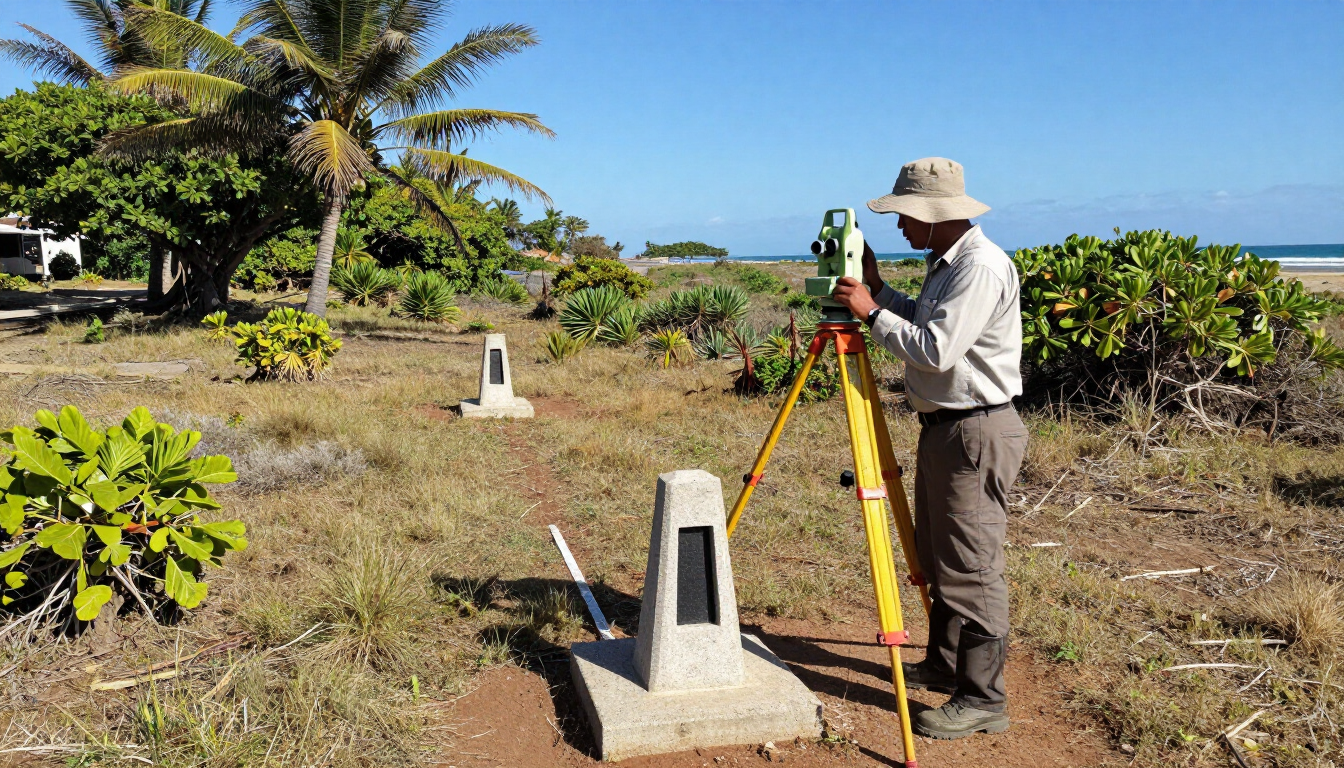
A title deed identifies registered land, but it does not replace a physical inspection. A licensed surveyor should help confirm the parcel’s position, dimensions, beacons, access, neighbouring plots, and relationship to roads, public land, waterways, or protected areas.
A boundary verification can identify problems that may not be obvious from the title document, including:
- Missing, moved, or disputed beacons.
- Encroachment by buildings, fences, cultivation, or roads.
- A smaller usable area than expected.
- Lack of legal or practical access.
- Overlap with a neighbouring parcel.
- Differences between the advertised location and the registered parcel.
Visit the land in person where possible. For overseas buyers, arrange an independent site inspection through a trusted advocate, surveyor, or professional representative. Request dated photographs, a survey report, and clear location information rather than relying only on online images or a guided viewing by the seller.
For a coastal purchase, also investigate access, drainage, planning controls, environmental considerations, and proximity to public beaches or protected areas. A desirable location does not remove the need for technical due diligence.
Which supporting documents should you review?
The exact documents depend on the property and transaction, but a cautious buyer may need to review:
- The original or properly verified title documentation.
- The official land search.
- Seller identification and, where applicable, company documents.
- Survey plans, mutation forms, deed plans, or registry maps.
- Rates and rent clearance information where relevant.
- Land control, planning, development, or authority consents where applicable.
- Succession, matrimonial, lender, or court documents where relevant.
- A professionally prepared sale agreement and transfer documents.
Your advocate should identify which documents are mandatory for the particular parcel. Do not assume that a rates clearance certificate proves ownership; it may only address a payment obligation. Similarly, a survey document should be interpreted alongside registry records and a physical inspection.
Who should help verify land in Watamu or Malindi?
A qualified Kenyan conveyancing advocate should lead the legal due-diligence process. The advocate can conduct or arrange the official search, review ownership and encumbrances, draft the agreement, confirm completion conditions, and coordinate transfer.
A licensed surveyor should address boundaries, acreage, beacons, access, and site conditions. Depending on the property, you may also need a planner, valuer, accountant, lender, or specialist adviser.
The estate agent can help coordinate viewings, documents, communication, and commercial information, but the agent should not replace independent legal or survey advice. At Malindi Watamu Agenti Immobiliari Real Estate, buyers can begin with our land inquiry , explore our listings , or learn more about our services . These resources support the property search; your appointed professionals should independently verify the legal position.
What should you avoid before completion?
Avoid paying a large deposit, signing an unconditional agreement, or taking possession before the essential checks are complete. Pressure to pay quickly is not a substitute for proof of ownership.
Use a written offer and sale agreement that clearly states the property, price, deposit, completion conditions, responsibility for costs, required consents, treatment of encumbrances, and remedies if the transaction fails. Payments should follow the advocate’s instructions and be supported by proper records.
Be cautious when:
- The seller refuses an official search.
- The title is available only as an unexplained photocopy.
- The parcel cannot be located or shown clearly.
- The price is unusually low without a credible explanation.
- The seller discourages independent legal advice.
If a document, identity detail, boundary, or payment request appears inconsistent, pause the transaction and ask your advocate to investigate.

Title deed verification checklist
Before committing to purchase, confirm that you have:
- Obtained a recent official land search.
- Matched the registered owner with the seller’s identity.
- Checked all charges, cautions, restrictions, and disputes.
- Confirmed parcel details, acreage, boundaries, beacons, and access.
- Reviewed supporting documents with an advocate and surveyor.
- Agreed written completion and payment conditions.
Frequently asked questions
Is a title deed alone proof that land is safe to buy?
No. The title must be checked against an official land search, seller identity, survey information, encumbrances, supporting documents, and the physical property. Professional verification is essential.
Can a foreigner buy land in Kenya?
Kenyan land ownership rules depend on citizenship, land classification, tenure, and the proposed ownership structure. Foreign buyers should obtain advice from a Kenyan advocate before making an offer or payment.
How long does land verification take in Kenya?
Timing varies by registry, location, document quality, professional availability, and whether consents or disputes are involved. Ask your advocate for a transaction-specific timetable rather than relying on a standard estimate.
Should I buy land before the survey is complete?
It is safer to complete the relevant survey and boundary checks before an unconditional commitment. If an offer must be made earlier, use written conditions that protect the buyer until due diligence is satisfactory.
Key takeaway
To verify a title deed before buying land in Kenya, start with an official land search, confirm the registered owner and parcel information, investigate every encumbrance, and have a licensed surveyor inspect the boundaries and access. Review supporting documents with an experienced conveyancing advocate, especially for coastal property, inherited land, company-owned land, or purchases by international and diaspora buyers. Do not let a viewing, attractive price, or seller’s urgency replace due diligence. When the legal, registry, survey, and payment details are consistent, you can make a more informed decision about proceeding with land in Watamu, Malindi, or elsewhere on the Kenyan Coast.